
The Bodhisattvas of Cave 1: Decoding Padmapani and Vajrapani
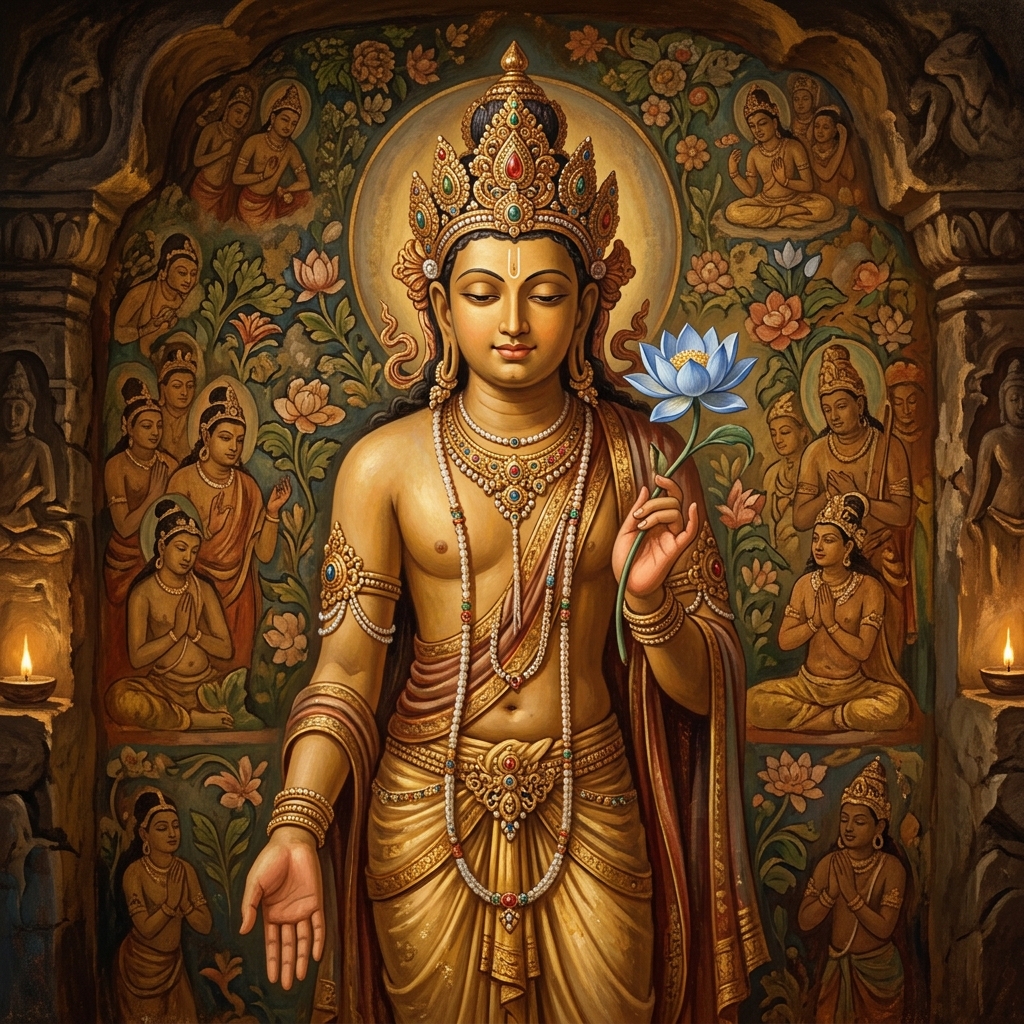
The Sentinels of the Sacred Shrine
Flanking the entrance to the main shrine inside Cave 1 at Ajanta stand two larger-than-life painted figures that represent the absolute pinnacle of classical Indian art. These are the Bodhisattvas Padmapani and Vajrapani. Carved and painted during the late 5th century under the patronage of the Vakataka dynasty, these figures act as spiritual guardians, welcoming pilgrims into the presence of the Buddha.
Padmapani: The Bearer of the Lotus
To the left of the shrine stands Bodhisattva Padmapani, whose name literally translates to "Lotus-in-Hand." He is the embodiment of infinite compassion (Karuna). Painted with a delicate, elongated form, he stands in the graceful tribhanga (triple-bend) posture, conveying a sense of serene movement and deep introspection. His downcast eyes look inward in meditation and outward with gentle compassion for all suffering beings. In his right hand, he holds a slender blue lotus flower (Utpala), symbolizing purity rising above the muddy waters of worldly attachment. His crown is incredibly ornate, decorated with pearls, sapphires, and rubies, representing his royal status as a spiritual prince who has renounced worldly power for universal salvation.
Vajrapani: The Bearer of the Thunderbolt
To the right of the shrine stands Bodhisattva Vajrapani, "the Bearer of the Thunderbolt." In contrast to the soft, tranquil grace of Padmapani, Vajrapani represents spiritual power, energy, and the unyielding determination required to cut through ignorance. He is painted with a sturdier, more powerful physique, holding a golden thunderbolt (Vajra) in his hand. His crown is even more massive and highly decorated, shimmering with ancient jewel motifs. Vajrapani is the protector of the Buddha and the dharma, symbolizing the active force of spiritual wisdom that conquers fear and doubt.
A Masterclass in Classical Aesthetics
The murals of Padmapani and Vajrapani are celebrated worldwide for their masterful use of color, line, and composition. The ancient artists used subtle shading around the eyes, nose, and limbs to create a three-dimensional, sculptural volume on a flat rock wall. The flowing, elegant lines of their bodies seem to breathe, capturing a transcendent state of peace. Through the restoration work of Shree Pimpare, the fading contours of these divine figures have been brought back to life with breathtaking clarity, allowing us to see these spiritual masterpieces exactly as they were painted 1,500 years ago.