
Exploring Cave 2: Ceilings, Mandalas, and Royal Splendor
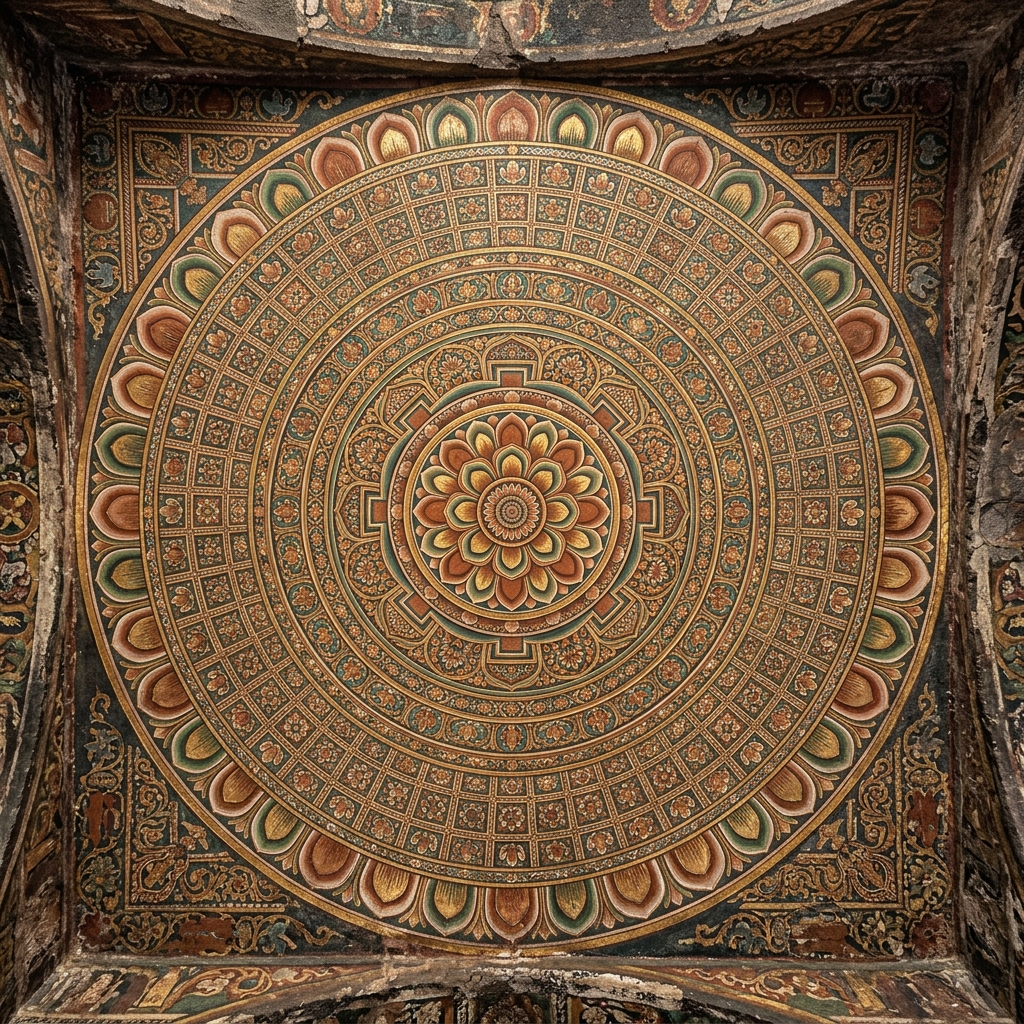
A Sanctuary of Geometric and Floral Perfection
While Cave 1 is famous for its majestic Bodhisattvas, **Cave 2** at Ajanta stands out as a breathtaking masterpiece of decorative design and ceiling ornamentation. Excavated in the late 5th century, this monastery is remarkably well-preserved, offering visitors an unparalleled glimpse into the complex geometric patterns, colorful mandalas, and beautiful narrative art that adorned the daily lives of ancient Buddhist monks.
The Famous Ceiling Mandalas
Look upward in Cave 2, and you will find yourself gazing at a celestial canopy of extraordinary complexity. The ceiling is painted to resemble a grand canopy made of textile fabrics, divided into neat square panels by painted beams. At the center of these panels are large, intricate circular **Mandalas**. These designs feature concentric bands of geometric shapes, curling foliage, and dancing figures, surrounding a central multi-petalled lotus flower. The precision of the drawing is astonishing, demonstrating that the ancient artists had a sophisticated understanding of geometry, symmetry, and balance. The lotus mandalas symbolize the cosmos, spiritual order, and the purity of the enlightened mind.
A Gallery of Female Divinity
Cave 2 is also celebrated for its prominent and beautiful depictions of female figures. The shrine walls and pillars feature exquisite paintings of *Hariti*, a protective Buddhist deity associated with childbirth and child protection, and *Watsu*, alongside numerous celestial maidens (Apsaras) and royal attendants. These figures are rendered with incredible grace, wearing delicate pearl jewelry, gossamer silk garments, and elaborate hairstyles, reflecting the high court fashion of the Vakataka dynasty.
The Miraculous Narrative Panels
On the walls of Cave 2 are painted scenes illustrating the miraculous birth of Gautama Buddha:
- Queen Maya's Dream: A gorgeous, delicate composition showing Queen Maya reclining on a royal couch, dreaming of a white elephant entering her side—the sign of conceiving a holy being.
- The Birth in Lumbini: Shows the baby Buddha emerging from the side of Queen Maya as she holds onto the branch of a Sal tree, with celestial gods gathering to shower him with flowers.