
The Fateful Discovery: How Cave 10 Was Stumbled Upon in 1819
Lost to the Jungle, Found by Chance
For nearly a thousand years, the rock-cut sanctuaries of Ajanta lay in absolute silence. Following the decline of Buddhism in India around the 8th century AD, the monks departed, the royal patronage dried up, and the surrounding jungle slowly reclaimed the cliffs. The horseshoe ravine became a wild, inaccessible valley, known only to local Bhil tribesmen. But on a spring morning in 1819, a fateful hunting trip would change art history forever.
April 28, 1819: The Tiger Hunt
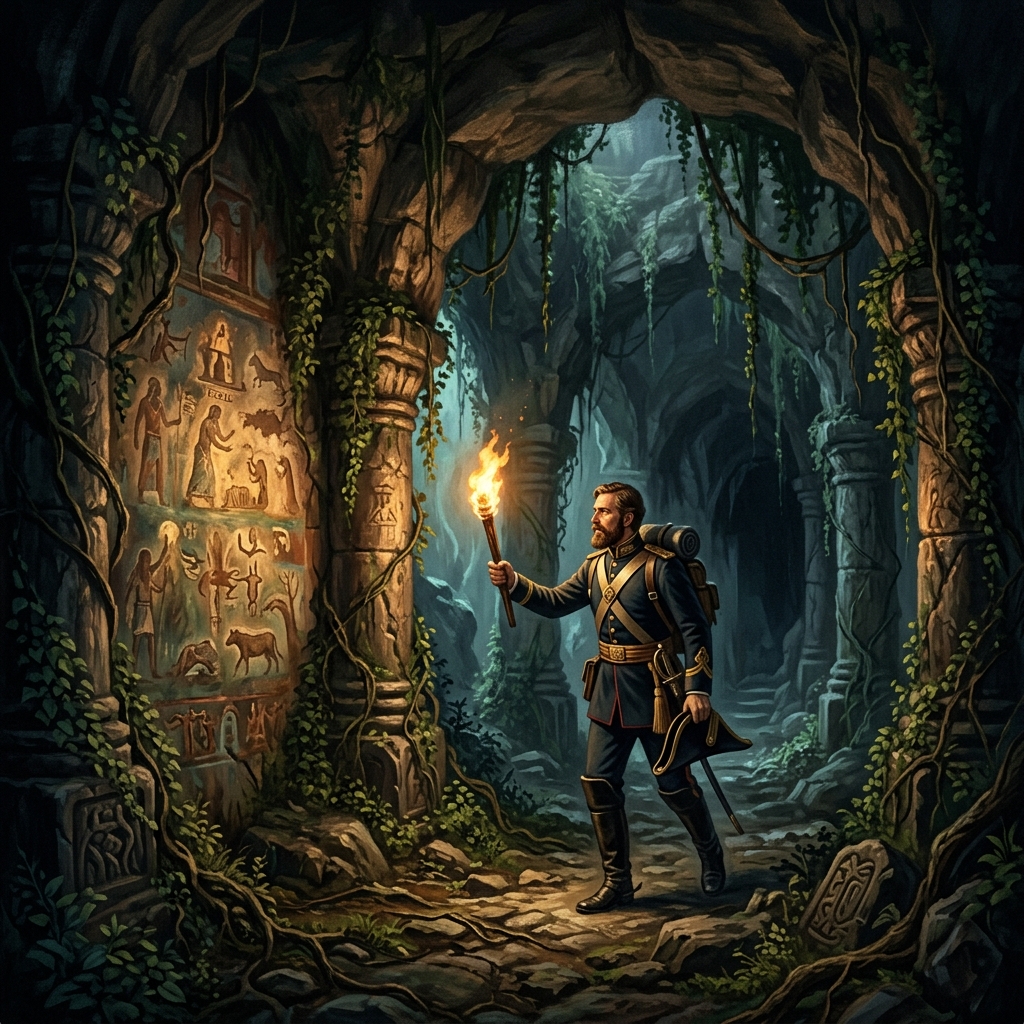
John Smith, a young British officer of the 28th Madras Cavalry, was stationed in the Deccan region. An avid sportsman, Smith set out into the rugged, heavily forested hills near Aurangabad to hunt tigers. Guided by a local shepherd boy who spoke of a place where tigers lived, Smith scrambled down the steep cliffs of the Waghora River ravine. Looking across the gorge, he noticed a strange, unnatural archway high up on the opposite cliff face, partially obscured by thick jungle foliage, vines, and centuries of accumulated silt.
Entering the Portal of Cave 10
Curious, Smith and his party hacked their way through the thick undergrowth and crawled inside. What they discovered left them speechless. They had entered the massive, vaulted hall of **Cave 10**, a grand 2nd-century BC Chaitya hall. The space was filled with dust, bat guano, and wild vegetation, but rising through the gloom were rows of majestic stone pillars and a colossal rock stupa. On the walls, beneath layers of dirt, were the faint, glowing outlines of ancient painted Buddhas.
Vandalism and the Birth of Modern Indology
To record his discovery, John Smith climbed up on a five-foot pile of silt that had accumulated inside the cave and scratched his name and the date—**"John Smith, 28th Cavalry, April 1819"**—directly onto the painted chest of a beautiful Bodhisattva figure on Pillar 13. While this act of graffiti is looked upon with horror by modern conservators, it remains a historical marker. News of Smith's discovery spread rapidly, sparking a wave of archaeological interest that drew researchers, artists, and tourists from across the globe. The silent valley was awakened, and the world was reintroduced to India’s greatest treasury of ancient art. Shree Pimpare's lifelike reconstructions have successfully captured the pristine state of these paintings, helping heal the visual wounds of early vandalism and natural decay.