
Jataka Tales: Illustrating the Past Lives of the Buddha
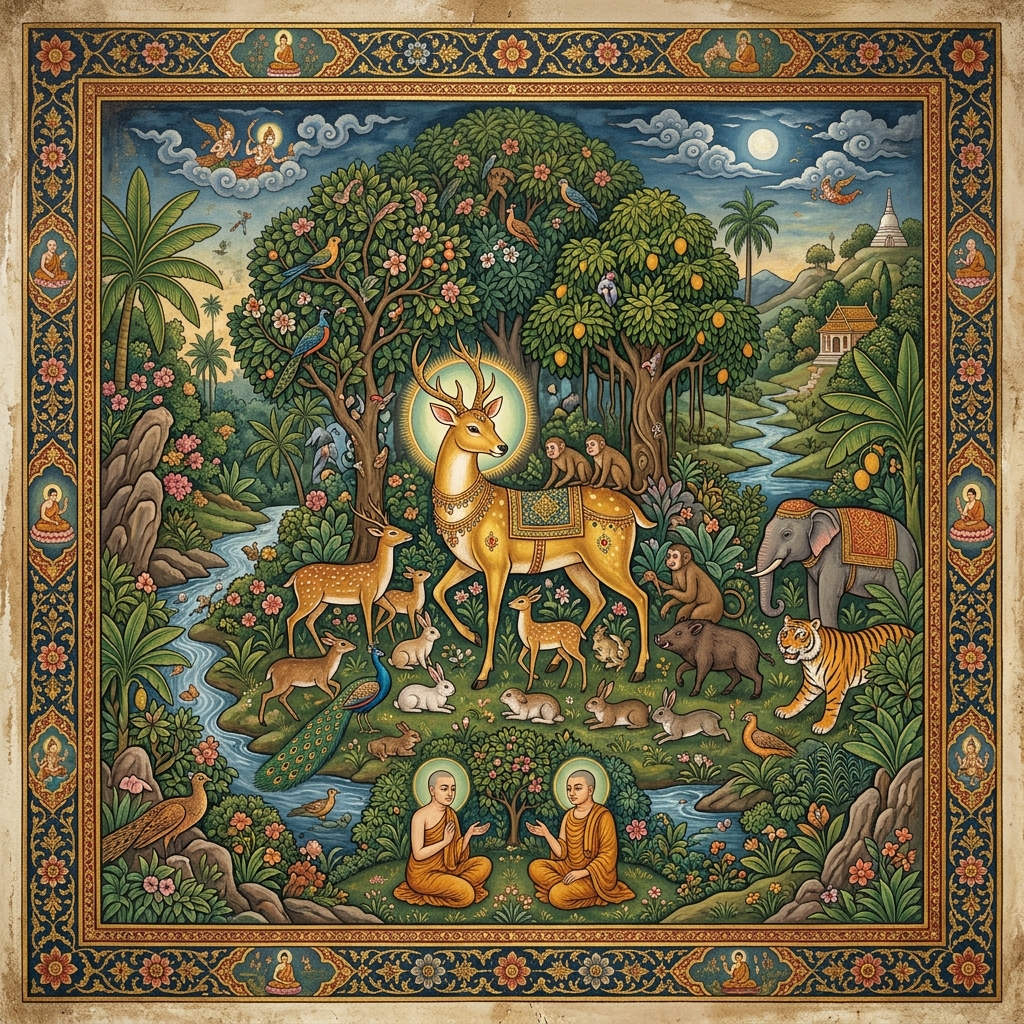
Visual Sermons in Basalt Stone
To enter the Ajanta Caves is to walk into a massive, three-dimensional storybook. The walls of the monasteries are covered from floor to ceiling with complex, sprawling narrative paintings. These are the illustrations of the Jataka Tales—a sacred collection of literature detailing the 547 previous births of Gautama Buddha, during which he perfected the virtues of generosity, wisdom, patience, and compassion required to achieve ultimate enlightenment.
The Structure of Visual Narrative
Unlike modern comic strips or Western paintings that follow a linear, left-to-right sequence, the narrative murals of Ajanta use a sophisticated technique known as "synoptic narrative." Multiple scenes from a single story are painted within a single, continuous landscape. There are no borders or frames separating different events. Instead, the transition from one scene to another is subtly marked by architectural elements like pillars, arches, or natural features like rivers, trees, and rock formations. A single figure of the Bodhisattva may appear multiple times in the same mural, guiding the viewer's eye through space and time.
Famous Tales Adorning the Walls
Among the hundreds of painted narratives, several Jataka stories stand out for their emotional depth and scale:
- The Sibi Jataka (Cave 1): The story of King Sibi, who offered his own flesh to a hawk to save a helpless dove, demonstrating ultimate sacrifice.
- The Hasti Jataka (Cave 16): Depicts the Bodhisattva born as a giant, noble elephant who threw himself off a cliff to provide food for starving travelers lost in the desert.
- The Chaddanta Jataka (Cave 10): A heartbreaking tale of a six-tusked elephant king who willingly gave his magnificent tusks to a vengeful queen, dying without a trace of anger.
Bridging the Sacred and the Secular
The Jataka paintings served a double purpose. For the resident monks, they were constant visual reminders of the rigorous spiritual path and moral virtues. For visiting royal patrons, merchants, and laypeople, they transformed the abstract teachings of Buddhism into relatable human and animal stories. The murals depict royal courts, bustling markets, wild jungles, domestic life, and celestial realms, providing art historians today with a rich, unmatched archive of 5th-century Indian clothing, architecture, music, and daily life. Through his lifelike reconstructions, Shree Pimpare has preserved these narrative compositions, keeping these moral and spiritual stories alive for modern observers.