Lotus and Wheel: Decoding Sacred Symbols of Ajanta Art
The Secret Visual Language of Ajanta
To the untrained eye, the murals and carvings of Ajanta are beautiful depictions of ancient Indian life, kings, and divinities. But to the pilgrim, every single flower, animal, hand gesture, and geometric design on the walls is a highly structured symbol representing deep Buddhist philosophies. Decoding this visual language transforms these ancient paintings into profound spiritual maps.
The Sacred Lotus (Padma): Purity and Potential
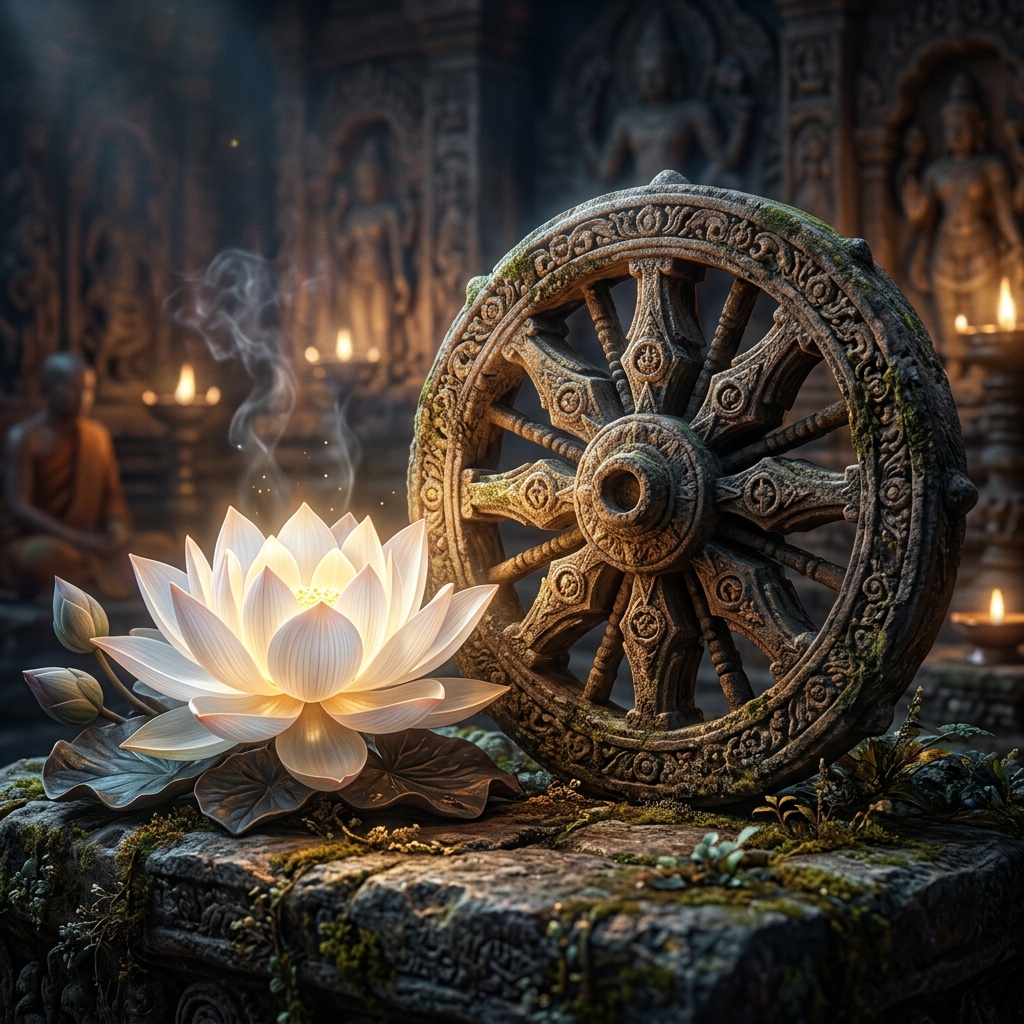
The **Lotus** is the most common motif in Ajanta art, appearing thousands of times on ceilings, pillars, medallions, and in the hands of deities. The lotus represents the core Buddhist concept of spiritual purity: Just as the lotus flower grows out of the dark, muddy water of a swamp but rises above to bloom in the clean air, pure and untouched, so can the human soul rise above the mud of ignorance, greed, and suffering to achieve ultimate enlightenment. A closed bud represents potential, while a fully opened flower represents the awakened state.
The Dharma Wheel (Dharmachakra): The Universal Law
Carved below the thrones of massive Buddha sculptures is the **Dharmachakra**, or the Wheel of the Law. The wheel represents the Buddha’s teachings, which roll through history, transforming minds. The hub represents moral discipline, the spokes represent wisdom, and the rim represents concentration. Often flanked by two kneeling deer, it commemorates the Buddha's first sermon in Sarnath, the *turning of the wheel of dharma*.
Hand Mudras: Gestures of the Soul
The colossal Buddha statues and painted figures use specific hand gestures (Mudras) to communicate instantly with the observer:
- Dharmachakra Mudra: Both hands held near the chest, index fingers touching the thumbs, representing the teaching of the sacred law.
- Abhaya Mudra: Right hand raised, palm facing outward, representing protection, fearlessness, and peace.
- Dhyana Mudra: Hands placed in the lap, palms upward, symbolizing deep, unshakable meditation.
The Three-Pointed Crown: Spiritual Sovereignty
The majestic crowns worn by Bodhisattvas like Padmapani represent their status as spiritual kings who rule over their own minds. Through his faithful, detailed canvas copies, Shree Pimpare has restored these sacred symbols with exact iconographical precision, ensuring that their profound philosophical meanings are communicated clearly to all who look upon them.