
The Mahajanaka Jataka: Royalty, Love, and Renunciation
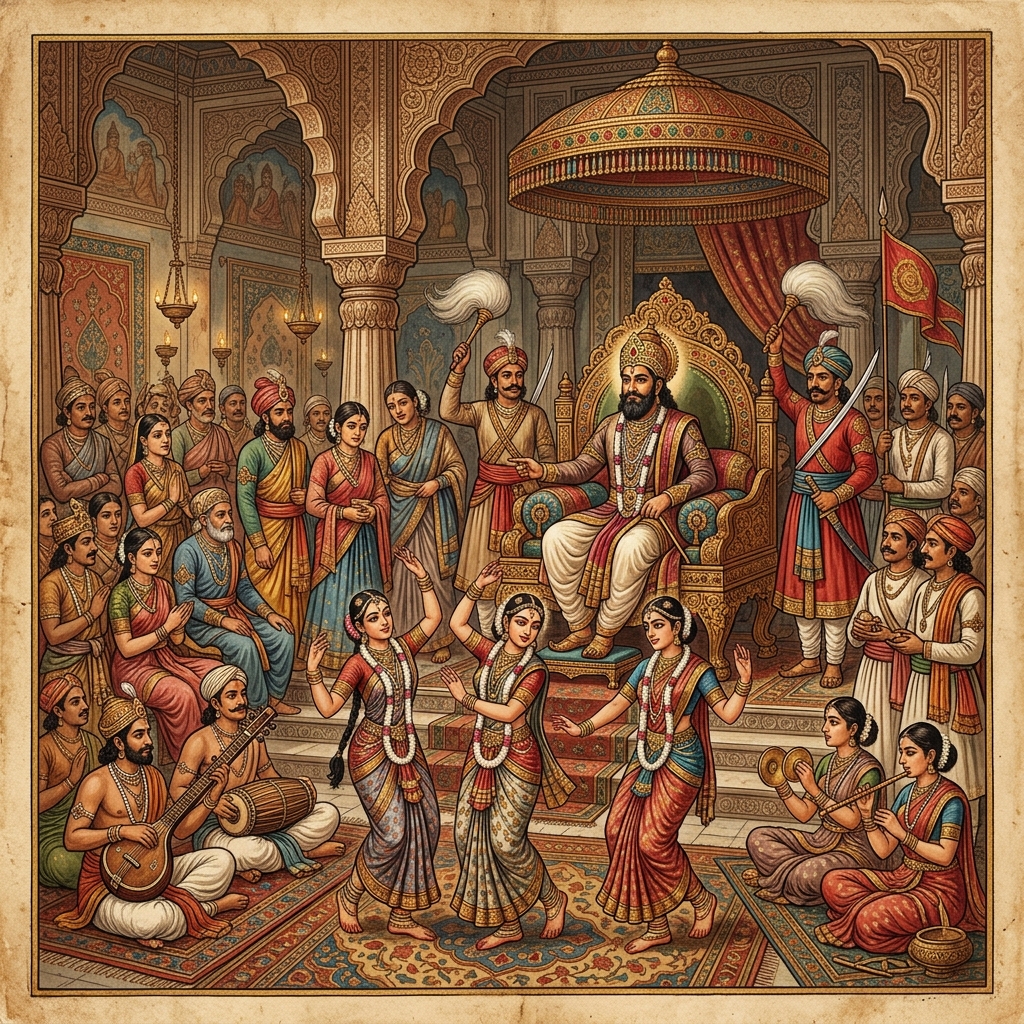
The Golden King of Cave 1
Spanning a massive wall in Cave 1, the **Mahajanaka Jataka** is widely considered one of the absolute masterpieces of ancient narrative painting. It tells the epic, cinematic story of King Mahajanaka (one of the previous incarnations of the Buddha), who experiences shipwreck, royal triumph, romantic love, and ultimately, a profound spiritual awakening that leads him to renounce his golden palace for a life of quiet ascetism.
The Drama of Shipwreck and Survival
The story begins with Prince Mahajanaka setting sail on a merchant ship to reclaim his lost ancestral kingdom. The mural vividly depicts a stormy ocean filled with giant sea monsters, crashing waves, and a sinking wooden vessel. The crew is shown in panic, praying to the gods, while the noble Mahajanaka remains calm, climbing the mast and jumping into the sea. He is saved from drowning by the compassionate sea goddess *Mani-Mekhala*, who carries him safely to the shores of Mithila, his ancestral land.
The Royal Court and Palace Splendor
Through a series of events, Mahajanaka proves his wisdom, wins the hand of Princess Sivali, and is crowned King. The Ajanta artists painted these royal scenes with unparalleled luxury. We see King Mahajanaka sitting in a grand pavilion, surrounded by beautiful musicians playing stringed instruments and drums, dancers wearing shimmering pearl necklaces, and court ministers. This panel is a valuable historical record, showing the exact court etiquette, royal hairstyles, jewelry, and luxury goods traded in ancient India during the 5th century.
The Awakening and Renunciation
Despite his wealth and a loving wife, Mahajanaka’s heart yearns for spiritual truth. The turning point comes when he visits the royal gardens and notices two mango trees: one that was barren but full of leaves, and another that was loaded with sweet fruit but had been torn and broken by greedy people. He realizes that worldly possessions lead only to conflict and suffering. The final scenes show a heartbroken Queen Sivali trying to dissuade him using dance, music, and wealth, but the King quietly slips away, discarding his silk robes for the simple saffron cloth of a wandering hermit. Shree Pimpare's master reconstruction restores this sprawling epic with gorgeous colors, capturing the profound transition from material luxury to spiritual liberation.