
Buddha’s Mahaparinirvana: The Monumental Sculpture of Cave 26
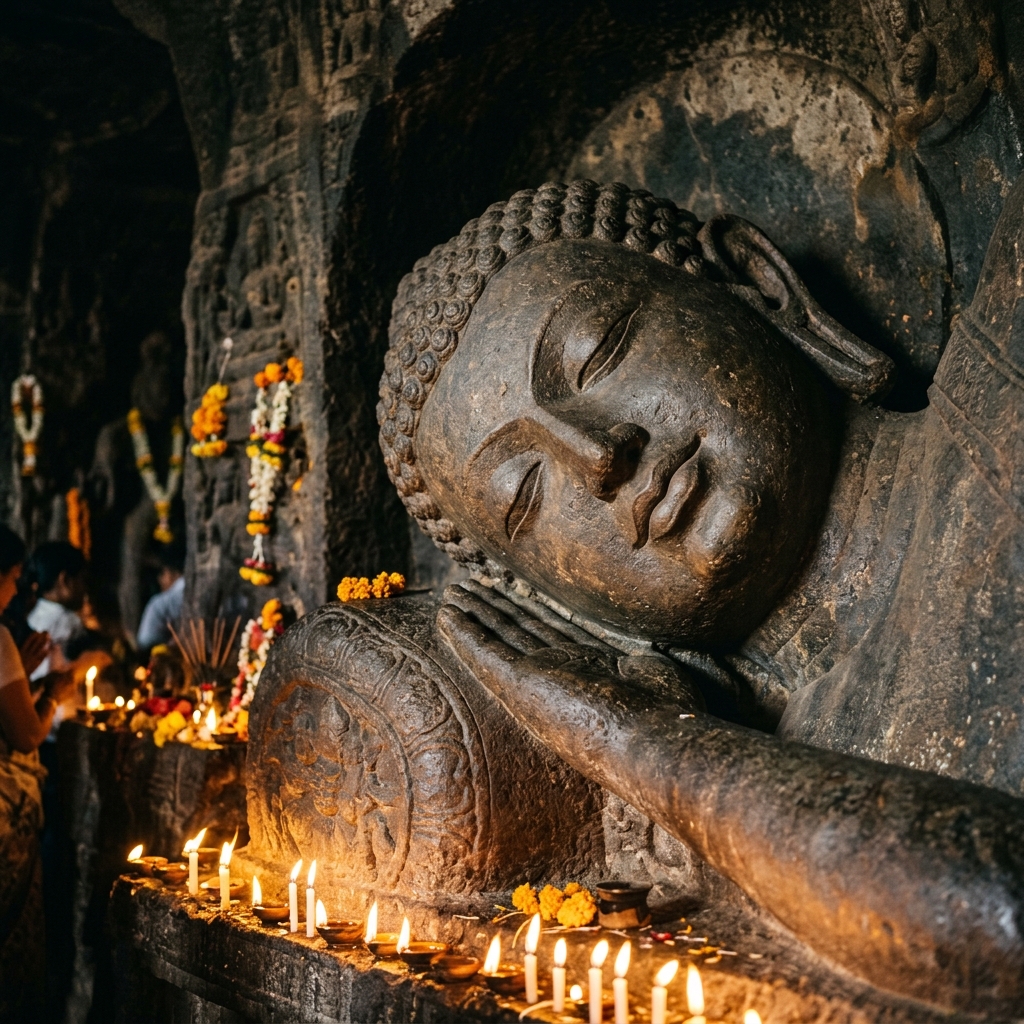
The Ultimate Silence of the Awakened One
Deep within the semi-circular prayer hall of Cave 26 at Ajanta lies one of the most powerful, emotionally moving, and monumentally scaled rock-cut sculptures in the world: the **Mahaparinirvana of the Buddha**. Carved directly into the basalt wall of the left aisle during the late 5th century, this colossal figure stretches over 24 feet in length, depicting the final moments of Gautama Buddha as he passes away from the physical world, entering the state of supreme, eternal peace.
The Reclining Posture (Shayana-Mudra)
The Buddha is carved lying on his right side, resting his head gently on his right hand, which is supported by a bolster. His face is a portrait of sublime tranquility. There is no trace of pain, fear, or struggle. His eyes are softly closed, and a faint, serene smile plays on his lips. This posture, known as the *Shayana-Mudra*, symbolizes absolute freedom from the cycles of birth, death, and suffering (Samsara). Every line of his flowing robe is carved with delicate, wave-like ridges, emphasizing the peaceful stillness of his body.
The Two Realms: Sorrow and Celebration
The genius of the Cave 26 sculptor lies in the dramatic contrast carved above and below the reclining figure:
- The Realm of Earthly Sorrow (Below): Carved along the pedestal are the figures of the Buddha's disciples, monks, and lay followers. They are shown in states of deep, human grief—some weeping, some resting their heads in their hands, struggling to accept the departure of their beloved master. The historical disciple *Ananda* is shown sitting near the Buddha's feet, slumped in sorrow.
- The Realm of Celestial Celebration (Above): Carved on the frieze above the reclining Buddha are heavenly beings (Devas and Gandharvas) playing divine instruments, throwing garlands of celestial flowers, and celebrating the Buddha's ultimate liberation and entry into eternal Nirvana.
A Spiritual Beacon for Pilgrims
For fifteen hundred years, the low, flickering light of oil lamps inside Cave 26 has cast dancing shadows over this colossal reclining figure, filling the silent prayer hall with an awe-inspiring, meditative atmosphere. It stands as a timeless monument to the core Buddhist teaching of impermanence and the ultimate goal of spiritual liberation. Shree Pimpare's meticulously detailed reconstructions capture the true, sacred geometry and emotional depth of this colossal sculpture, preserving its spiritual power for all to experience.