
Preserving Sacred Heritage: The Power of Canvas Reproductions
The Inevitable Decay of Stone and Plaster
The Ajanta Caves have survived for two thousand years, but they will not last forever. Despite the tireless preservation efforts of the Archaeological Survey of India (ASI) and international conservation bodies, the original murals are facing an inevitable, slow decay. Humidity from tourists' breath, micro-climate changes, insect infestations, and the natural flaking of the ancient mud plaster are taking a steady toll. Every decade, faint details disappear, lines crack, and vibrant colors turn pale. In this race against time, how do we save this priceless heritage?
The Tragedy of Early Restoration
Ironically, some of the greatest damage was done by early, well-meaning conservationists. In the early 20th century, Italian restorers applied thick layers of shellac and polyurethane varnish over the paintings to preserve them. Over the decades, this varnish reacted with the air, turned dark brown, cracked, and trapped moisture underneath, permanently discoloring and destroying vast sections of the precious paintings. While modern digital photography can document the current damaged state, it cannot physically restore what has been chemically lost.
Physical Canvas Reproductions as Heritage Backups
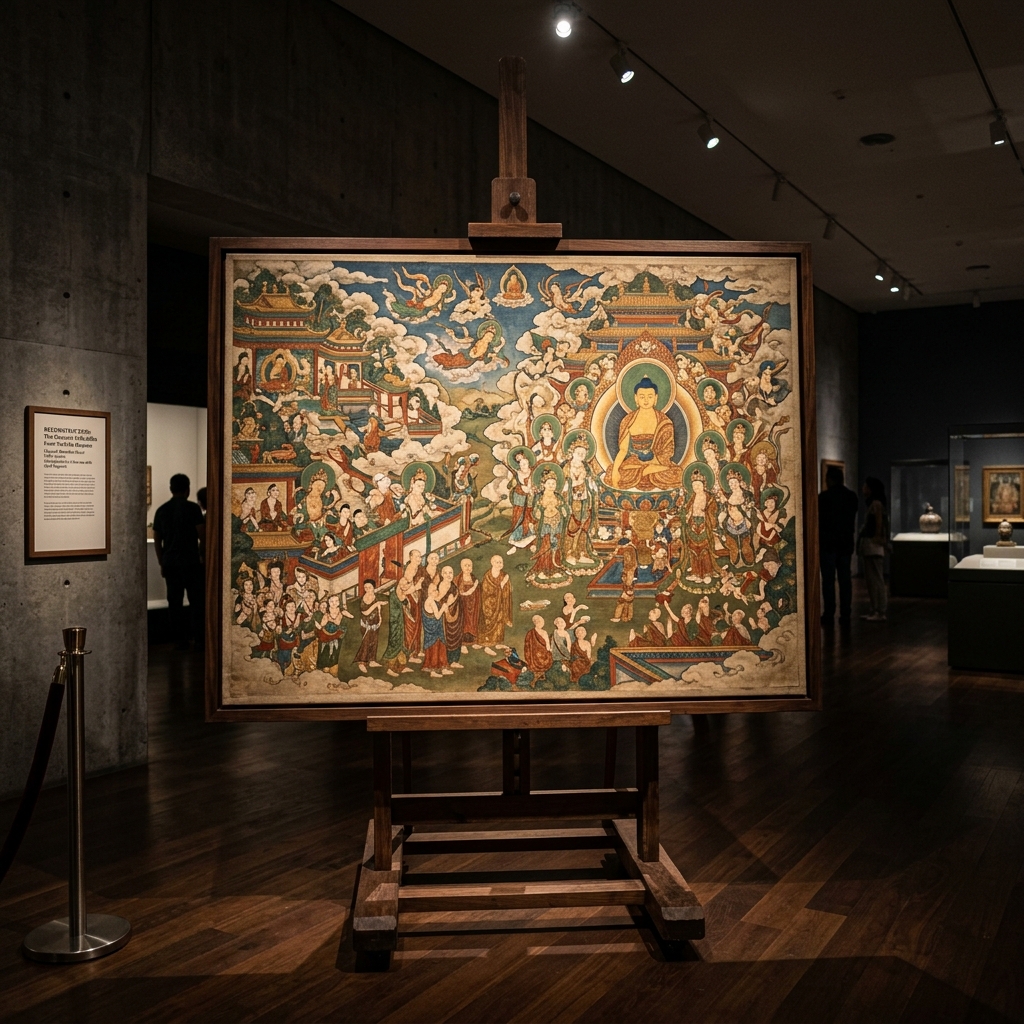
This is where the monumental work of Shree M.R. Pimpare becomes a vital historical asset. Hand-painted, high-fidelity canvas reconstructions are not mere decorative copies; they are physical, archival backups of human history. By meticulously recreating every line, restoring lost compositions based on rigorous historical study, and using archival pigments, Pimpare Ji has captured the paintings in their true, original state. Unlike digital files that can be corrupted or lost, a physical canvas painting possesses the same texture, warmth, and scale as the original wall murals. These canvases can travel the world, educating global audiences and bringing the beauty of Ajanta to universities, museums, and galleries without exposing the fragile caves to destructive tourist traffic.
A Duty of Preservation
To support and display Shree Pimpare's canvas prints in public spaces or private homes is to participate in a grand tradition of heritage preservation. It ensures that even if the physical plaster inside the basalt cliffs eventually returns to dust, the spiritual vision, classical draftsmanship, and sublime beauty of Ajanta's golden age will remain alive, visible, and inspiring for generations to come.