
Rock-Cut Architecture: Engineering the Monolithic Caves
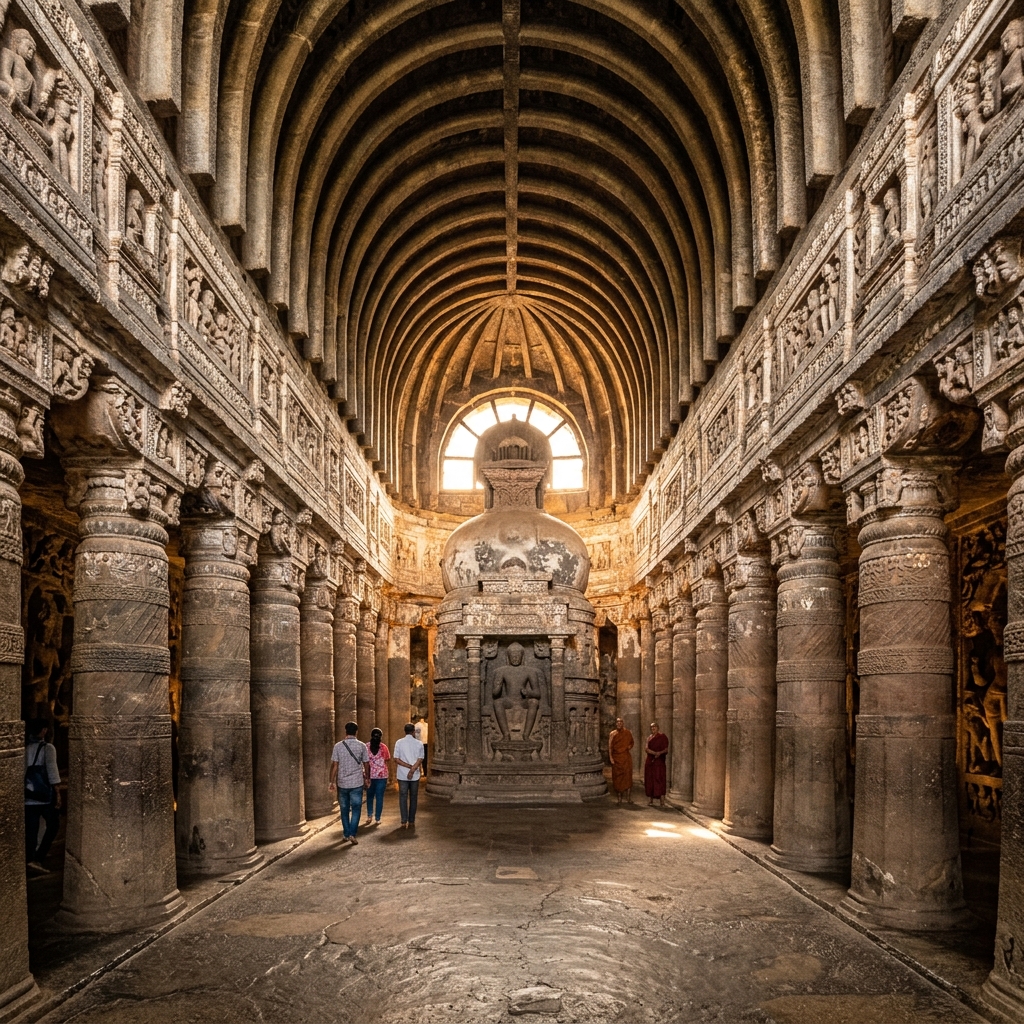
The Monolithic Sculptures of the Deccan
The Ajanta Caves are celebrated for their paintings, but their very existence is a miracle of ancient civil engineering and rock-cut architecture. Nestled in the crescent-shaped ravine of the Waghora River in Maharashtra, India, these 30 caves were not built brick-by-brick. Instead, they were painstakingly carved out of the living basalt rock of a vertical cliff face, representing a colossal triumph of human labor and geometry.
Two Styles: Viharas and Chaityas
The excavations at Ajanta are divided into two distinct architectural forms based on their function:
- Viharas (Monasteries): Designed as residential halls for monks. They consist of a central square hall surrounded by small, rock-cut sleeping cells. At the back of the hall is a deep sanctum containing a colossal sculpture of the Buddha in teaching posture.
- Chaityas (Prayer Halls): The grand worship halls of the community. These are long, apsidal halls with vaulted ceilings, lined with two rows of majestic stone pillars. At the far end stands a monolithic rock-cut Stupa, acting as the focus of circumambulation (Pradakshina).
Top-Down Excavation: Engineering Without Scaffolding
How did ancient architects construct perfectly aligned columns, vaulted ceilings, and deep inner chambers inside a solid mountain without modern machinery? The answer lies in their brilliant excavation methodology: They worked from the **top down**. Instead of starting at the floor and building upward, stone carvers began at the very ceiling of the planned cave. They hammered and chiselled a horizontal entry slot at the top of the cliff, then worked their way downward. As they excavated lower, they left columns of rock intact to support the roof, carving them into beautiful, ornamental pillars. This method had a massive practical advantage: it eliminated the need for wooden scaffolding, as the workers always stood on the unexcavated rock floor beneath them as they carved.
Basalt: The Ideal Medium for Eternity
The selection of the volcanic basalt cliff was not accidental. Basalt is an extremely hard, fine-grained igneous rock that provides incredible structural strength, allowing for wide, column-supported halls without the risk of collapse. It also takes fine details beautifully, allowing sculptors to carve intricate friezes, celestial figures, and massive Buddha statues directly from the mountain itself. The rock-cut temples of Ajanta stand today as eternal monoliths, a testament to the master craftsmen who looked at a barren cliff and saw a sanctuary of divine art.